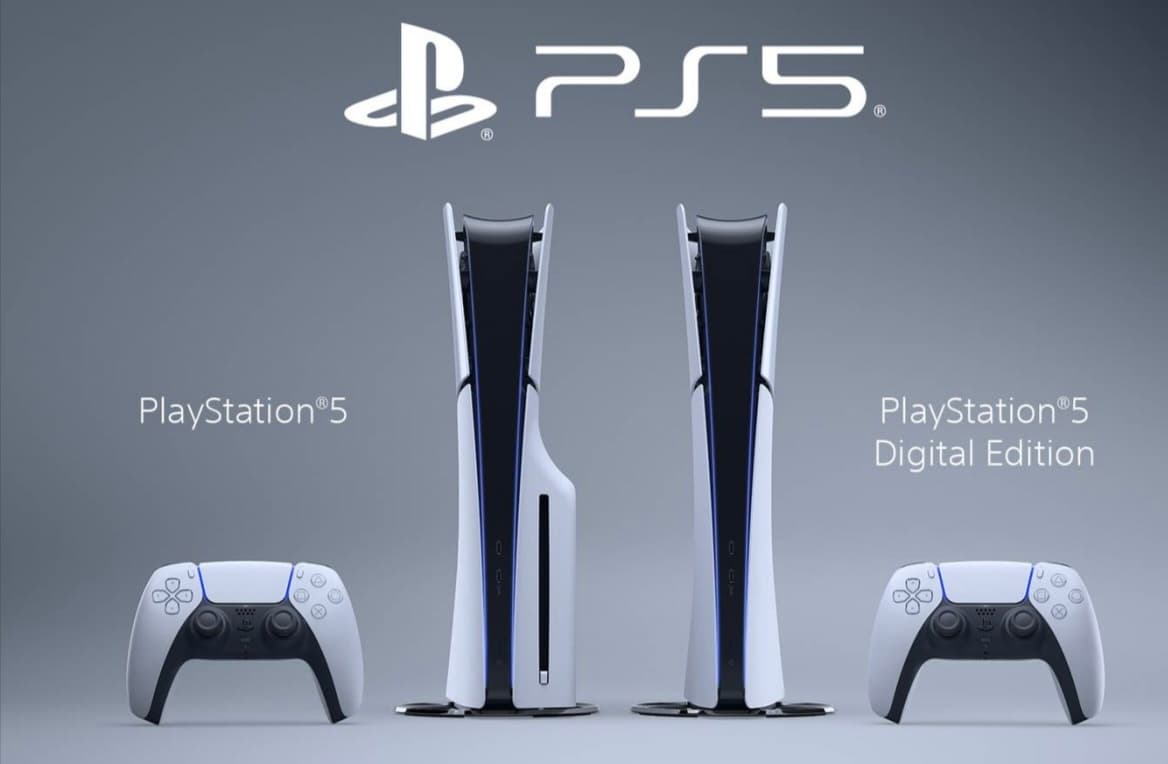
The landscape of interactive entertainment is undergoing a seismic shift, and a recent decision by the European Union has just provided a powerful aftershock. In a move that has significant implications for both consumers and the broader gaming industry, the EU has formally declined to intervene in Sony PlayStation's strategic pivot towards an increasingly digital-only future, a direction widely interpreted as a precursor to the eventual phasing out of physical game discs. This non-intervention essentially greenlights Sony's long-term vision, cementing the trajectory set by the PlayStation 5 Digital Edition and other industry trends. For many, this decision underscores the accelerating march towards an all-digital ecosystem, raising critical questions about game ownership, accessibility, and the very nature of how we acquire and experience our beloved titles. The era of disc drives in consoles, once a ubiquitous feature, now appears to be on a clear path to obsolescence, with profound consequences for collectors, budget-conscious gamers, and the historical preservation of interactive media.
The EU's Stance and Its Implications for the Market
The European Commission's decision to not open an investigation into Sony's practices, specifically regarding concerns about the potential removal of disc drives from future consoles and the implications for the used game market, was not made lightly. While specific complaints were lodged by consumer advocacy groups, citing potential anti-competitive practices and a reduction in consumer choice, the Commission ultimately concluded that there was insufficient evidence of a breach of EU competition law at this stage. Their reasoning likely hinges on the principle that companies are generally free to design their products as they see fit, provided they do not engage in explicit monopolistic behavior or abuse a dominant market position in a way that directly harms consumers or smaller competitors. This outcome is a powerful signal: regulatory bodies, at least for now, are not prepared to dictate hardware design choices or market strategies if the digital transition is perceived as a natural evolution driven by technological advancements and consumer habits, rather than a forced restriction.
This non-intervention sets a significant precedent, not just for Sony, but for the entire console market. It suggests that future iterations of gaming hardware, from PlayStation to Xbox and potentially even Nintendo, could gradually shed their physical media capabilities without immediate regulatory pushback. The EU's stance effectively validates a market-driven shift towards digital distribution, placing the onus on consumer demand and broader market dynamics to shape the future. While consumer groups may continue to advocate for physical media rights, the lack of regulatory intervention removes a major potential hurdle for platform holders looking to streamline their operations, reduce costs, and exert greater control over their content distribution channels. This could accelerate the timeline for an all-digital console generation across the board, fundamentally altering retail landscapes and consumer expectations.
Sony's Digital-First Strategy: A Decades-Long Evolution
Sony's journey towards a digital-first strategy is not a sudden pivot but rather a carefully orchestrated evolution spanning several console generations. It began earnestly with the PlayStation 3's robust PlayStation Network (PSN) and the introduction of downloadable titles, gaining significant momentum with the PlayStation 4, which saw digital sales soar. The release of the PlayStation 5 Digital Edition was arguably the most explicit declaration of intent, offering a disc-less console at a slightly lower price point. This strategic direction is underpinned by clear economic imperatives. Eliminating physical media production slashes manufacturing costs associated with discs, cases, and packaging. It also removes the logistical complexities and expenses of shipping and warehousing physical units. Furthermore, direct digital sales cut out intermediary retailers, allowing Sony to capture a larger share of the revenue from each game sold and offer more flexible pricing strategies, including subscription bundles like PlayStation Plus.
Beyond cost reduction, the digital transition offers Sony unparalleled control over its ecosystem. It effectively curtails the lucrative used game market, a long-standing point of contention for publishers who see no direct revenue from second-hand sales. By transitioning to digital licenses, Sony ensures that every "sale" is a direct transaction, maximizing lifetime value per customer. This control extends to regional pricing, promotional events, and the ability to bundle games with services, creating a more integrated and sticky ecosystem. This long-term vision positions PlayStation not just as a hardware provider, but as a comprehensive digital entertainment platform, where content delivery, monetization, and user engagement are tightly managed within its proprietary digital storefront. The EU's decision reinforces Sony's autonomy in pursuing this highly profitable and strategically advantageous path, essentially validating their business model innovation in the face of evolving consumer consumption patterns.
- Reduced Production & Distribution Costs:Eliminates expenses related to manufacturing physical discs, packaging, printing, shipping, and retail warehousing, leading to higher profit margins per unit sold.
- Enhanced Revenue Control & Direct Sales:Allows Sony to bypass third-party retailers, capture a larger percentage of each game's sale price, and implement flexible pricing, promotions, and subscription models directly.
- Elimination of the Used Game Market:Ensures that every game acquisition is a direct transaction, preventing revenue loss from secondary market sales and maximizing the lifetime value of each title.
- Streamlined Ecosystem & Service Integration:Facilitates deeper integration with PlayStation Plus, cloud gaming services, and other digital offerings, fostering a more cohesive and controlled user experience.
- Reduced Environmental Impact:Decreases the production of plastic waste from physical media and the carbon footprint associated with global shipping and retail logistics.
The Unintended Consequences for Gamers and Preservation
While the digital shift presents clear advantages for platform holders, it introduces a complex array of challenges and concerns for consumers and the broader cultural landscape of gaming. A primary apprehension revolves around the concept of 'ownership.' When purchasing a digital game, users typically acquire a license to play, not true ownership of the software. This distinction is critical; it means that access can be revoked if terms of service are violated, or if a game is delisted from the digital storefront, or if the platform's servers are eventually shut down. This reliance on a persistent digital infrastructure raises significant questions about game preservation. Unlike physical discs, which can theoretically be played decades later (assuming compatible hardware), digital-only titles are entirely dependent on the longevity of online services, posing a substantial threat to the historical record of video games.
Furthermore, the transition to all-digital exacerbates issues of accessibility and affordability for certain demographics. Gamers in regions with unreliable or slow internet infrastructure face substantial hurdles, as downloading multi-gigabyte titles becomes a time-consuming and potentially costly endeavor. The lack of a physical secondary market also removes a crucial avenue for budget-conscious players to acquire games at reduced prices, often forcing them to pay full price or wait for official digital sales. The ability to lend, borrow, or resell games – long-standing consumer rights with physical media – is entirely absent in the digital realm. This shift consolidates power with platform holders, potentially leading to less competitive pricing and fewer consumer-friendly options in the long run, prompting a re-evaluation of what it means to truly 'own' a game in the 21st century.
"The move to all-digital is an undeniable economic boon for publishers, but it fundamentally alters the relationship between the player and their games. We're moving from a model of tangible ownership to one of perpetual licensing, and without robust legal frameworks for digital preservation and consumer rights, we risk losing significant portions of our interactive heritage to the inevitable march of server shutdowns and platform obsolescence."
- Loss of True Ownership:Digital purchases grant a license, not ownership, meaning access can be revoked by the platform holder, and games cannot be resold, lent, or truly archived independently.
- Game Preservation Risks:Digital titles are vulnerable to being delisted from storefronts or becoming unplayable if platform servers are discontinued, posing a severe threat to the long-term preservation of gaming history.
- Internet Dependency & Accessibility Barriers:Requires a stable, high-speed internet connection for downloads, updates, and initial authentication, creating significant barriers for players in underserved regions or with data caps.
- Reduced Consumer Choice & Price Rigidity:Eliminates the competitive pricing often found with physical retailers and the option to purchase pre-owned games, potentially leading to higher average prices for consumers.
- No Secondary Market for Resale:Removes the ability for consumers to recoup some of their investment by selling games they no longer play, impacting affordability and consumer flexibility.
The Broader Industry Landscape and Future Outlook
Sony's intensified digital strategy is not occurring in a vacuum; it reflects a broader industry trend embraced by its competitors, albeit with varying approaches. Microsoft, for instance, has heavily leaned into its Xbox Game Pass subscription service and the Xbox Series S, an all-digital console, demonstrating a similar commitment to a digital-first future. However, Microsoft's emphasis on backward compatibility and its 'Play Anywhere' initiative (where PC and Xbox versions are often bundled) offers a slightly different flavor of digital accessibility. Nintendo, while also pushing digital eShop sales, maintains a strong attachment to physical cartridges for its Switch console, catering to a different demographic and acknowledging the unique portability and collectibility aspects of its platform. This divergence highlights that while the general direction is digital, the pace and specific implementation may vary, offering some degree of market differentiation.
The accelerating adoption of cloud gaming services further complicates and fuels this digital transition. Platforms like Xbox Cloud Gaming, GeForce Now, and PlayStation's own streaming offerings reduce the reliance on powerful local hardware and, by extension, physical media. As internet infrastructure improves globally and streaming technology matures, the need for local storage and disc drives diminishes even further. This convergence of digital distribution and cloud streaming paints a clear picture: the future of gaming is increasingly untethered from physical media. Consumers can expect future console generations to offer disc-less options as standard, with physical disc drives potentially becoming niche accessories or disappearing entirely. The gaming world is hurtling towards an era where libraries are entirely digital, managed in the cloud, and accessible across multiple devices, fundamentally redefining what it means to be a gamer in the 21st century and placing an unprecedented emphasis on robust digital rights and preservation efforts.