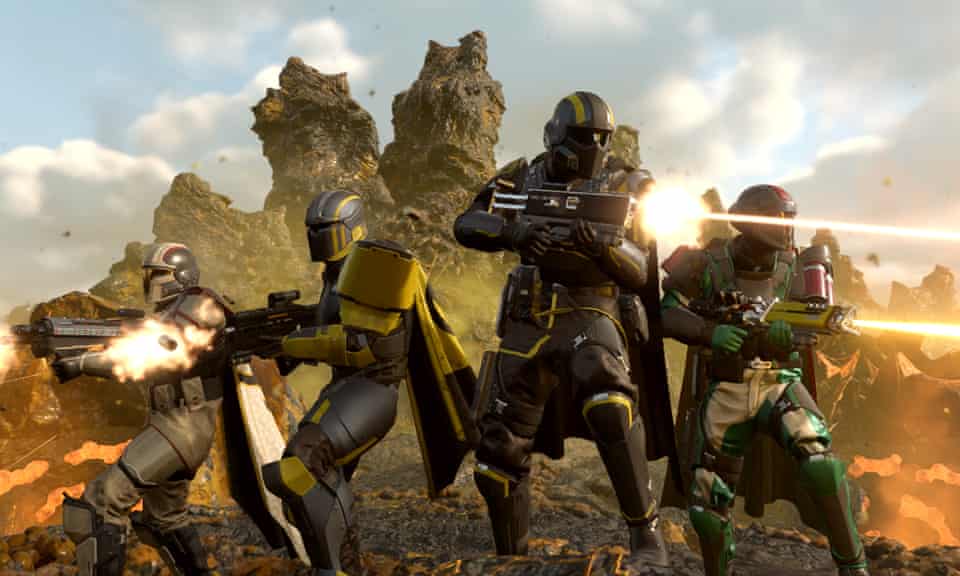
In an industry increasingly dominated by established franchises and highly anticipated sequels, a relatively niche title from a mid-sized Swedish studio, Arrowhead Game Studios, has defied expectations to become one of the most talked-about and commercially successful games of the year. Helldivers 2, a third-person cooperative shooter, launched in February 2024 to an immediate and overwhelming reception, quickly surpassing concurrent player records for PlayStation Studios titles on PC and selling millions of copies across PlayStation 5 and PC. Its meteoric rise wasn't just a testament to solid gameplay; it became a fascinating case study in community management, live service monetization, and the volatile dynamics of player-developer relations. This article will dissect the intricate layers of Helldivers 2's success, its tumultuous post-launch period, and its potential to set new benchmarks for the live service gaming model.
Spreading Managed Democracy: Core Gameplay and Design Philosophy
At its core, Helldivers 2 is an isometric twin-stick shooter's evolution into a bombastic, over-the-top third-person spectacle. Players embody Helldivers, elite soldiers of Super Earth, tasked with spreading 'Managed Democracy' across hostile planets by eradicating alien insectoids (Terminids) and cyborg automatons (Automatons). The gameplay loop is deceptively simple yet profoundly engaging: drop into a mission, complete objectives, extract, and contribute to the ongoing Galactic War. What elevates Helldivers 2 beyond a generic shooter is its commitment to emergent gameplay, tactical depth, and relentless chaos. Friendly fire is always on, stratagems (orbital strikes, supply drops, sentry turrets) are called in via directional input codes, and environmental hazards are as deadly as the enemy hordes. This combination ensures that no two missions are ever truly alike, fostering a sense of improvisation and genuine teamwork that is often lacking in many modern co-op experiences.
- Stratagems:Explain their tactical importance and variety. These powerful abilities, ranging from devastating orbital bombardments to defensive sentry guns and vital supply drops, require precise input codes under pressure, adding a layer of skill and coordination to every engagement. Misinputs or mistimed calls can lead to hilarious or tragic friendly fire incidents, reinforcing the game's chaotic charm.
- Friendly Fire Mechanics:How it elevates tactical play and adds humor/tension. The constant threat of accidentally eliminating a squadmate or getting caught in an allied explosion forces players to maintain situational awareness, communicate effectively, and consider their positioning, transforming simple firefights into intricate tactical dances.
- Dynamic Objectives and Environmental Hazards:Mission variety and environmental challenges. Beyond standard extermination tasks, objectives range from launching ICBMs to activating seismic drills, often complicated by environmental modifiers like dense fog, meteor showers, or volcanic activity, ensuring mission replayability and forcing adaptive strategies.
- Galactic War Meta-Narrative:Player influence on the ongoing war. The overarching narrative is driven by player actions across the galaxy. Successful missions contribute to the liberation of planets, pushing back enemy factions and offering a tangible sense of collective purpose that binds the community to the game's unfolding story.
The Unforeseen Challenges of Super-Earth's Popularity
The explosive popularity of Helldivers 2, while a boon, brought with it significant growing pains. Arrowhead Game Studios was simply not prepared for the sheer volume of players attempting to log in concurrently. Server capacity issues plagued the game for weeks post-launch, leading to frustrating login queues, disconnects, and instability. The development team worked tirelessly, often communicating transparently about their struggles and progress, pushing out rapid-fire patches and server upgrades to cope with the unprecedented demand. This period highlighted the inherent challenges of scaling live service infrastructure for unexpected viral success, where even robust planning can be overwhelmed by organic player growth.
However, the server woes were overshadowed by a more severe crisis that erupted months after launch: the mandatory PlayStation Network (PSN) account linking requirement for PC players. Initially, PC players could opt out of linking a PSN account, but Sony and Arrowhead announced that this would become mandatory for all PC players, including existing ones, citing 'technical and security reasons.' This decision sparked an immediate and furious backlash from the PC community, particularly from players in regions where PSN services are not available, effectively locking them out of a game they had purchased. The game's Steam rating plummeted, review bombs flooded the platform, and calls for refunds escalated. The controversy underscored the delicate balance between platform holder policies, developer decisions, and player trust, especially when it impacts game accessibility and ownership.
"The Helldivers 2 PSN debacle was a harsh reminder that even the most beloved live service games can quickly lose player goodwill if platform policies override player agency and accessibility. It's a critical lesson for the industry on the power of community backlash and the necessity of thoughtful, player-centric decision-making."
A Blueprint for Live Service Done Right? Monetization and Community
Amidst the server struggles and account linking controversies, one aspect of Helldivers 2 consistently drew praise: its monetization model. In a landscape saturated with aggressive battle passes, loot boxes, and pay-to-win mechanics, Helldivers 2 adopted a refreshingly player-friendly approach. The game features a 'Warbond' system, essentially a battle pass, which offers new weapons, armor, emotes, and cosmetics. Crucially, these Warbonds are permanent, meaning players are under no time pressure to complete them. Furthermore, the premium currency, 'Super Credits,' can be earned simply by playing the game and discovering them during missions, allowing dedicated players to unlock all cosmetic and gameplay-affecting items without spending an additional dime beyond the base game purchase. This ethical monetization strategy has been lauded as a stark contrast to industry norms, fostering goodwill and a sense of fairness among its player base.
- Earnable Premium Currency:Players can acquire Super Credits, the game's premium currency, by finding them during missions, allowing them to purchase Warbonds and cosmetic items from the in-game store without spending real money. This significantly lowers the barrier to entry for content.
- Permanent Warbonds:Unlike most battle passes that expire, Helldivers 2's Warbonds are permanent additions, granting players the freedom to progress at their own pace without the anxiety of missing out on limited-time content.
- Cosmetics Only (with minor gameplay elements):While Warbonds do offer new weapons and armor, these are sidegrades rather than direct upgrades, ensuring no pay-to-win elements exist. The focus remains on cosmetic customization and diverse loadout options.
- Transparent Development and Community Engagement:Arrowhead's active communication through social media, developer blogs, and in-game messages, often delivered with the game's characteristic satirical tone, has built a strong sense of trust and community, making players feel genuinely heard and valued.
The swift and unprecedented reversal of the PSN linking mandate, directly attributed to immense player pressure and review bombing, stands as a landmark moment in modern gaming. Sony and Arrowhead listened, acknowledged their misstep, and retracted the requirement, a rare occurrence for such a major policy decision. This event, coupled with Arrowhead's consistent communication and commitment to their fair monetization model, has solidified Helldivers 2's position not just as a fun game, but as a potential blueprint for how live service titles can engage their communities respectfully and sustainably. The future of Helldivers 2, with its ongoing Galactic War, new content drops, and a deeply invested player base, looks bright, proving that even in a crowded market, a well-crafted game with a player-first philosophy can achieve stratospheric success.